" height="20px" id="Q7YDnZ_kP" width="77.99999574977083px"/></g></svg>)
Customer events: how to build long-term relationships beyond the sale
Customer events should not be one-off business actions. In this article, we explore how to design customer events as part of a long-term relational strategy aimed at building trust, value, and brand differentiation.
Table of contents
Customer Events: How to Build Long-term Relationships Beyond Sales
For a long time, events with clients have been understood as one-off business actions: a product presentation, a dinner, an annual event, or a conference.
However, companies that use events in a more impactful way have changed their approach. They no longer see them as isolated moments aimed at closing opportunities, but as a strategic tool for building lasting relationships with clients and partners.
The Problem with Purely Commercial-Focused Events
When an event with clients is designed solely from a sales logic, repeated patterns often emerge:
overloaded agendas with commercial messages
little space for real conversation
forgettable experiences
relationships that do not evolve after the event
The result is predictable: the event occurs, but its impact quickly fades.
Events as Part of the Relationship, Not as One-off Actions
Strong relationships with clients are not built in a single moment. They are built with continuity, trust, and consistent experiences.
In this context, events with clients work best when understood as part of a relational program, not as isolated initiatives.
This implies thinking:
what role each event plays within the relationship
what type of bond is meant to be strengthened
how the experience evolves over time
The Different Types of Events with Clients and Their Function
Although there are many formats, most events with clients serve one of these functions.
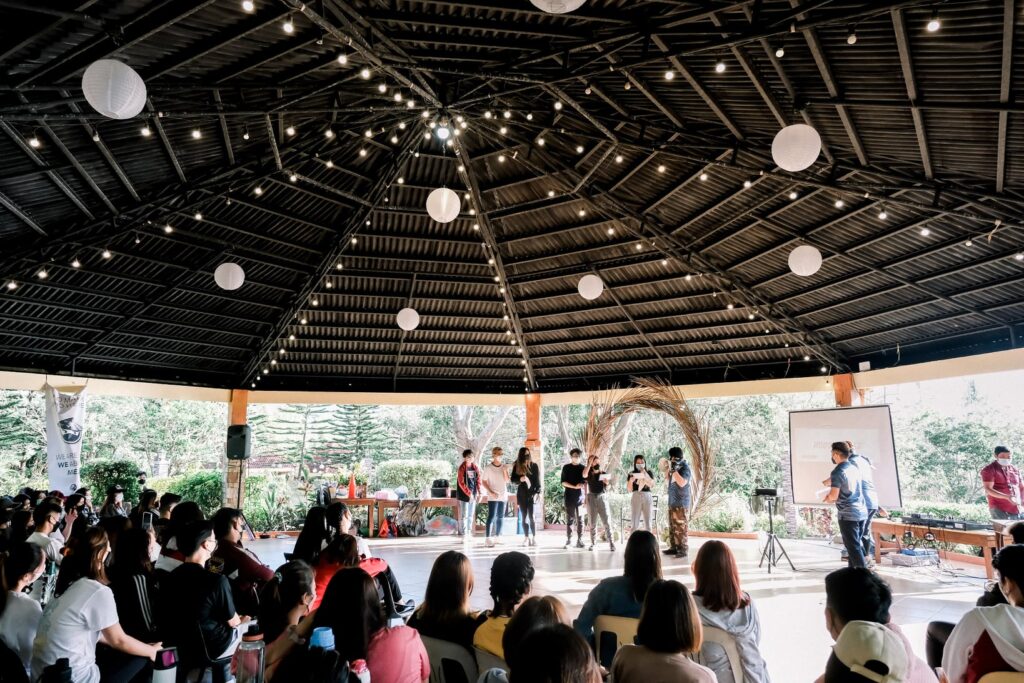
Relationship and Community Events
These are meetings designed to generate closeness and trust.
They often include:
informal spaces
open conversation
shared experiences
Their goal is not to sell, but to build relationships.
Value and Knowledge Events
They provide relevant content for the client.
For example:
workshops
learning sessions
sector meetings
Here, the focus is on delivering real value, not on promotion.
Strategic and Partnership Events
These are more focused and smaller gatherings.
They serve to:
align expectations
explore opportunities
strengthen key relationships
In these events, the quality of the design is critical.
The Importance of Customer Experience
In client events, every detail communicates.
From the rhythm of the agenda to how attendees are welcomed, everything contributes to the perception the client has of the company.
A well-designed event conveys:
professionalism
care
coherence
respect for the client's time
Measuring Success Beyond Leads and Opportunities
The impact of a client event does not always reflect immediately in commercial metrics.
Other equally relevant indicators include:
quality of the conversations generated
continuity of the relationship after the event
recurring participation
brand perception
The best events sow relationships that bear fruit over time.
The Role of Meetreal in Client Events
Meetreal helps companies design and co-organize client events that align with a long-term relationship vision.
Through strategic planning, expert support, and proprietary technology, Meetreal enables:
defining the role of each event within the client relationship
designing consistent and memorable experiences
adapting each event to objectives, format, and budget
executing with high standards of quality
Meetreal acts as a partner, not as a one-off provider, helping each client event reinforce trust and the bond with the brand.
Conclusion
Client events should not be isolated actions aimed solely at sales.
When designed as part of a relational strategy, they become one of the most effective tools to build trust, differentiate the brand, and strengthen long-term relationships.